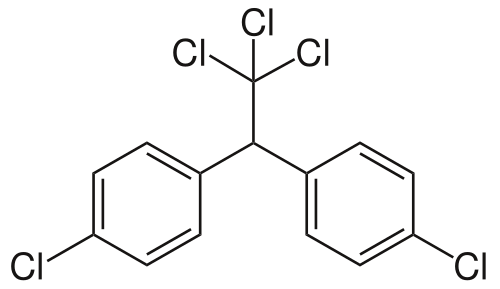
DDT (Dichlorodiphenyltrichloroethane)
High risk — documented harm to users
Product
Defunct
Product
Defunct
Safety Risk
7/10
Affiliations
J.R. Geigy (predecessor to Syngenta)
Product Details
legacy
Persists in soil, water, wildlife, and human tissue decades after use
us_status
Banned for agricultural use since 1972
originator
J.R. Geigy (predecessor to Syngenta)
global_status
Banned under Stockholm Convention except malaria control
chemical_class
Organochlorine insecticide
Summary
DDT is the insecticide that defined modern environmentalism: Rachel Carson's 1962 book Silent Spring documented its devastating effects on birds and wildlife through bioaccumulation, helping spur the creation of the U.S. EPA and leading to a 1972 U.S. ban on its agricultural use. DDT is extremely persistent — it is still detectable in people's bodies, homes, and wildlife more than 50 years after Silent Spring was published. The 2001 Stockholm Convention on Persistent Organic Pollutants banned most uses of DDT worldwide, but carved out an exemption that remains controversial: DDT is still manufactured and sprayed by the thousands of tons each year in some countries for indoor malaria-vector control, a practice public health authorities defend as a net life-saving tradeoff even as environmental groups warn of its lingering ecological toll.
Timeline
1962-01-01
Rachel Carson publishes Silent Spring, documenting DDT's ecological harm.
1972-01-01
The United States bans DDT for agricultural use.
2001-01-01
The Stockholm Convention on Persistent Organic Pollutants bans most uses of DDT worldwide, exempting malaria-vector control.
Evidence & Sources
Created
7/17/2026
Last Update
7/17/2026